
I spent a Saturday morning writing Facebook ads once, and the third headline was just the first with the words shuffled around. That’s the job an AI ad copy generator for small business owners is supposed to take off your plate. An AI ad copy generator for small business is software that turns a short brief about your product, offer, and audience into ad headlines and body copy sized for Google, Meta, or LinkedIn. I checked seven of them in November 2026. The honest answer: only one is genuinely free now, the cheapest useful paid option starts at $29 a month, and the tool that fits a Google Ads account is not the tool that fits a Meta-first shop.
In this guide: the seven tools compared, a US pricing table, text vs visual, a brief-to-live-ad workflow, and the 2026 ad-policy rules.
TL;DR — Key Takeaways
- Only one of the seven is genuinely free in November 2026: HubSpot Campaign Assistant. Copy.ai’s free plan was retired for new signups in late 2025.
- Cheapest paid start: Copy.ai Chat at $29/month (5 seats); best for Google Ads text, Anyword from $49/month; finished visuals, AdCreative.ai from $39 or Predis.ai from $32. Jasper is the best writer and the hardest to justify at $69 a seat; Writesonic is no longer a budget tool — free plan gone, from $79/mo billed annually.
- Meta and Google don’t ban AI-written ad copy, but they label AI-made visuals automatically. What gets small businesses in trouble is AI inventing claims, prices, or customer quotes.
How We Tested
I did not run card-walled free trials or feed the same brief through all seven tools — so no side-by-side output screenshots and no scores pretending otherwise. I read each tool’s official pricing page (for AdCreative.ai, its homepage) and cross-checked every price against two independent pricing checks from October or November 2026. Prices are US dollars as listed in November 2026.
First, pick the right kind of tool: words or finished ads?
Text-only writers — Copy.ai, Jasper, Anyword, HubSpot, Writesonic — give you headlines and body copy; you paste them into Google Ads or Meta Ads Manager and supply the image. Pick one for Google Search ads or if you have product photos. Visual ad makers — AdCreative.ai and Predis.ai — generate the image or video and the copy together, sized for the placement. Pick one for Meta, Instagram, or TikTok.
Pricing: which AI ad copy generator for small business is actually free?
| Tool | Monthly | Annual | Entry plan includes | Free tier / trial |
|---|---|---|---|---|
| HubSpot Campaign Assistant | $0 | $0 | Google/Meta/LinkedIn + email/landing copy | Free, no card |
| Copy.ai Chat | $29/mo | $24/mo | 5 seats, unlimited words, GPT/Claude/Gemini | None — free plan retired |
| Anyword Starter | $49/mo | $39/mo | 1 seat, unlimited copy, 50 predictions/mo | 7-day trial, 2,500-word cap |
| AdCreative.ai Starter | $39/mo | $20/mo | 20 credits/mo, 1 brand, 1 user, static only | 7-day trial, 20 credits, card req. |
| Predis.ai Core | $32/mo | $19/mo | 1,300 credits/mo (~325 images), 1 brand | 3-day trial, card req., no refunds |
| Jasper Pro | $69/seat/mo | $59/seat/mo | 1 seat, Canvas, 2 Brand Voices | 7-day trial, card req. |
| Writesonic Starter | $99/mo | $79/mo | 15 AI articles/mo, site audits | 7-day trial, no card |
Only one tool here is genuinely free: HubSpot Campaign Assistant. Copy.ai’s free plan was retired for new signups in late 2025, and Writesonic’s free plan ended in October 2026.
1. HubSpot Campaign Assistant — the free one. Verdict: start here.
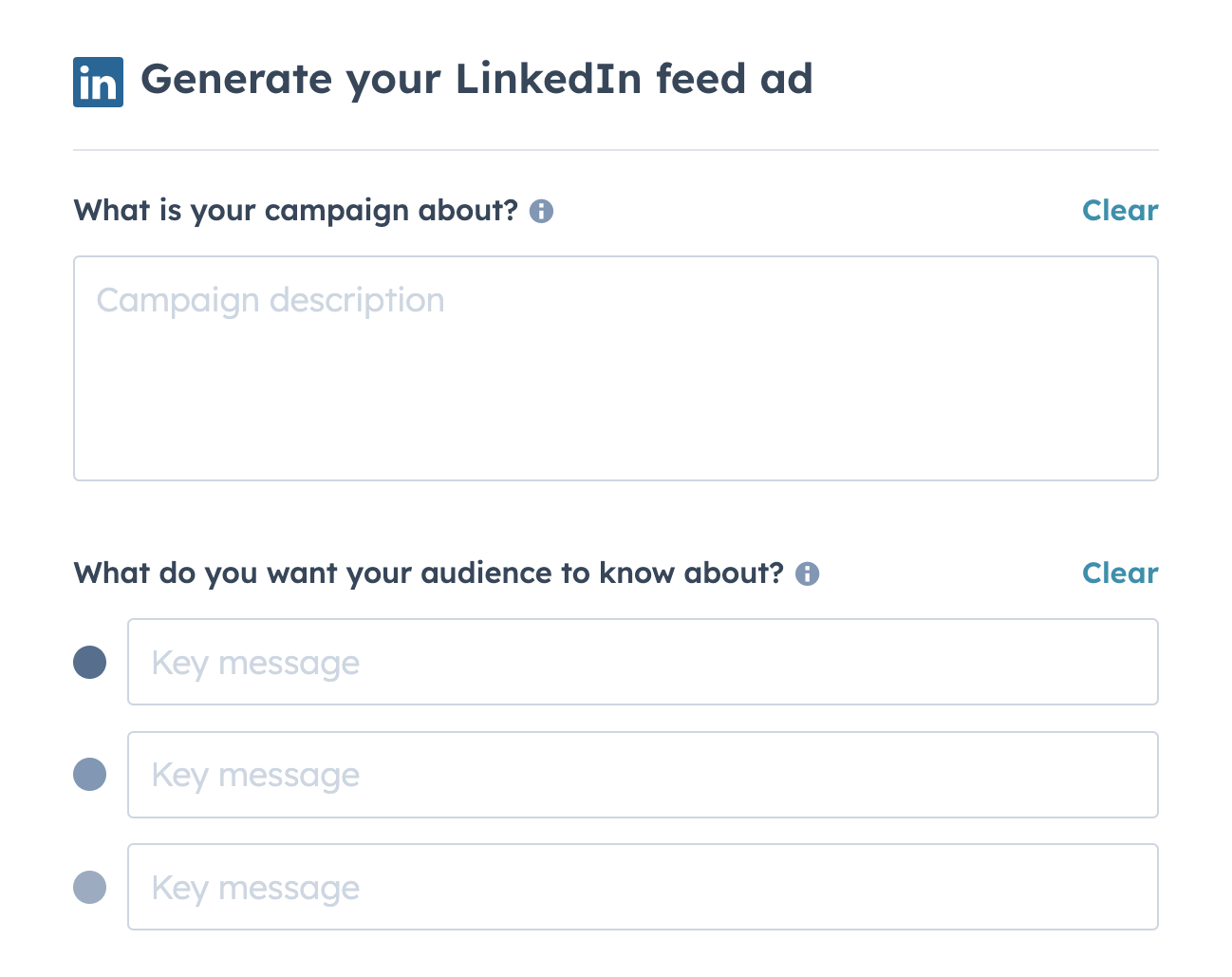
HubSpot Campaign Assistant is free, needs no credit card, and writes Google, Meta, and LinkedIn ad copy from a short brief: campaign, audience, tone. It also writes matching email and landing-page copy. The catch: it works best if your contacts already live in HubSpot’s free CRM. Deeper AI features cost ~$800/mo (Marketing Hub Pro) — but for ad copy alone, the free tool does the job.
Price: $0. Best for: testing AI ad copy free, especially on HubSpot’s CRM. Skip it if: you want scoring or finished visuals.
2. Copy.ai — cheapest paid start, but a different product than it was. Verdict: worth it for a small team that lives in chat.

Copy.ai in November 2026 is not the copywriting app its reputation comes from: after the Fullcast acquisition it rebuilt as a go-to-market platform, and entry product Chat is a multi-model assistant (OpenAI, Anthropic, Gemini) with unlimited words, five seats for $29 a month. For ad copy it’s a solid general writer with 90-plus templates — but a generalist: no headline scoring, no character-count checks.
Price: Chat $29/mo ($24 annual). Best for: a 2-to-5-person team wanting one shared AI chat window. Skip it if: you’re solo and only need ad copy. See our AI content writing tools guide for more on Copy.ai.
3. Anyword — the only one that predicts performance. Verdict: best for Google Ads text.
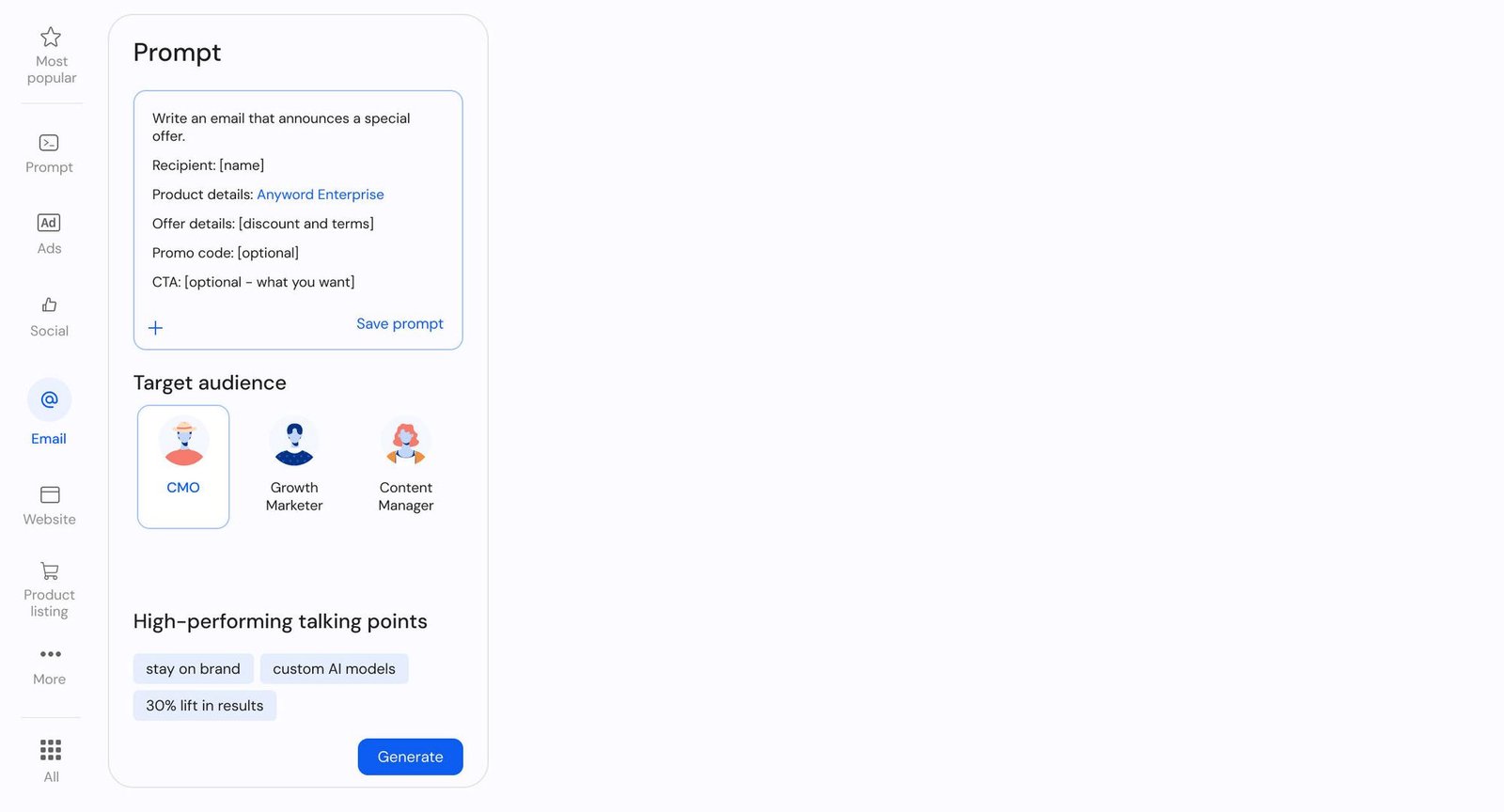
Anyword‘s one feature the others lack: a predictive performance score (0–100) per variant, trained on real marketing data. The score is not an A/B test, but a ranked shortlist beats an unranked pile when you can’t afford to test ten variants. Starter is $49 a month ($39 annual): one seat, unlimited copy, 50 predictions a month — the real limit, since the next tier is $99. No free plan; trial capped at 2,500 words.
Price: Starter $49/mo ($39 annual). Best for: Google Ads copy where picking the strongest variant before you spend matters. Skip it if: you need visuals.
4. AdCreative.ai — finished ads with a score, at a real price. Verdict: best for Meta advertisers who need volume.

AdCreative.ai is the visual counterpart to Anyword: image and copy together, each creative scored on predicted conversion. Starter is $39 a month for 20 credits (one per download), one brand, one user, static images only. Video and full scoring need Professional at $249 a month. No free plan: the 7-day trial gives 20 credits, needs a card, and renews automatically — cancel before day 7. Acquired by Appier in early 2026; plan contents changed between October and November 2026 alone.
Price: Starter $39/mo ($20 annual). Best for: Meta or Instagram ads at volume. Skip it if: you mostly run Google Search ads, or $249 a month for video is out of reach.
5. Predis.ai — social ads, captions, and scheduling in one place. Verdict: best for social-first shops.
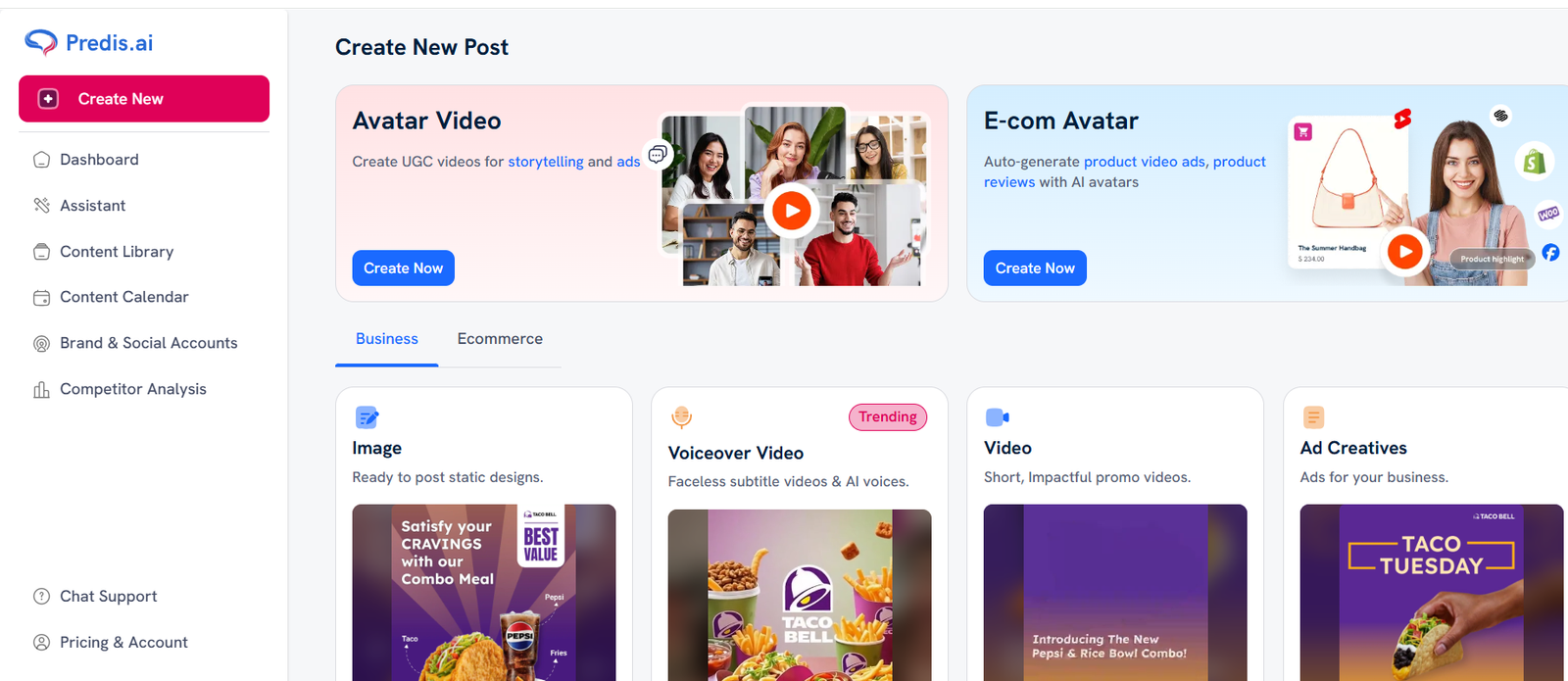
Predis.ai turns a product link or prompt into a designed social post, then schedules it. Its Ad Creatives section does the same for paid ads, and pulls competitor ads from the Meta Ad Library. Core is $32 a month ($19 annual), 1,300 credits — about 325 images or 33 videos; video eats credits ten times faster. The 3-day trial is the shortest here — card required, charged day 3, no refunds. No free plan. See our AI social media content generator guide for the wider picture.
Price: Core $32/mo ($19 annual). Best for: a shop that lives on Instagram, TikTok, and Facebook and wants posts, ads, and scheduling in one subscription. Skip it if: Google Search ads are your main channel.
6. Jasper — the best writer here, priced like it. Verdict: worth it only if brand voice is your bottleneck.
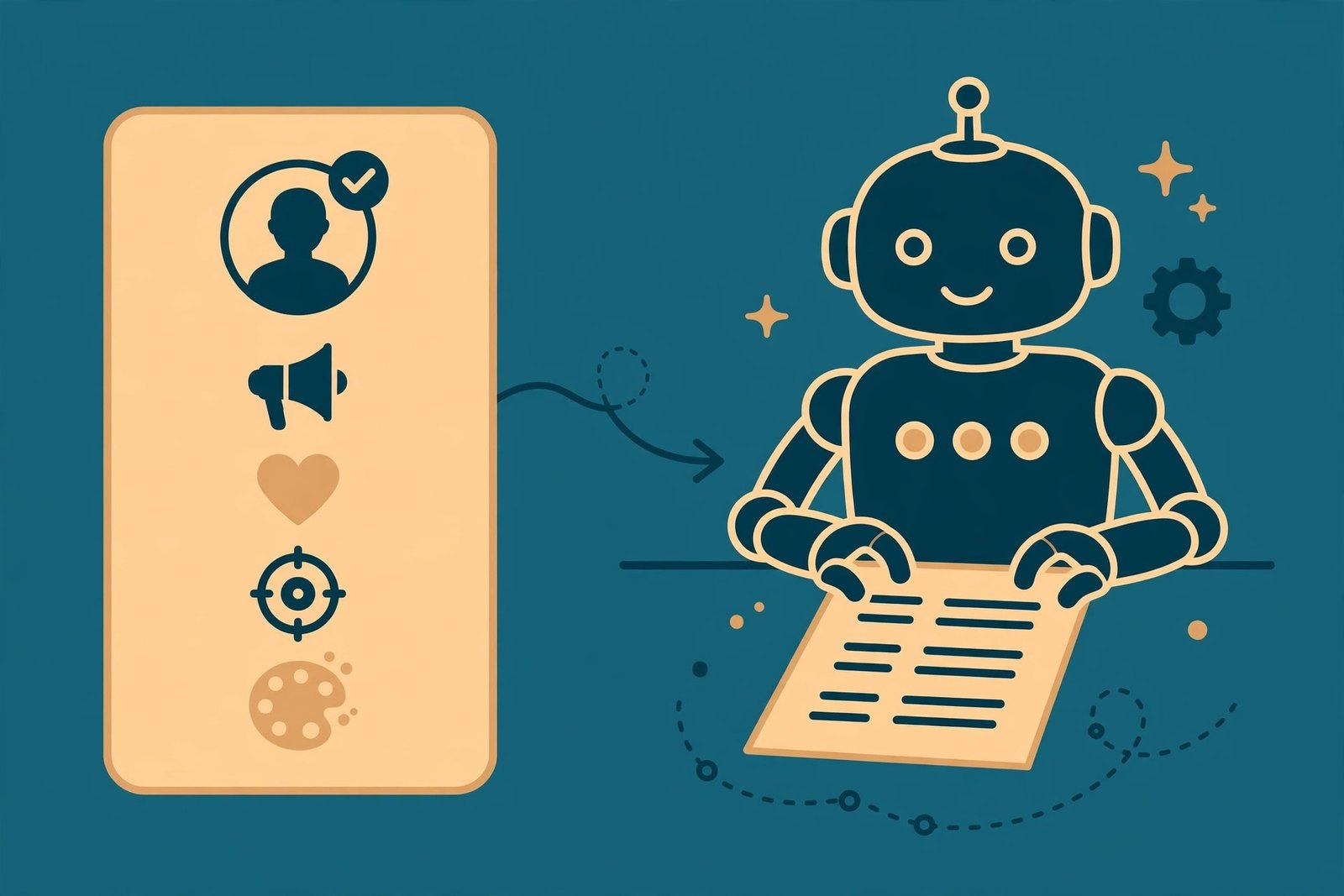
Jasper is the strongest pure writer of the seven: Brand Voice learns how your business sounds, and it covers ads, email, social, and blog work. The price is the argument against it: Pro is $69 a seat a month ($59 annual), one seat only. No free plan; the 7-day trial needs a card, converts day 8. The old Creator tier at $39–49 a month no longer exists. For ad copy alone, $69 is hard to defend against free HubSpot and $29 Copy.ai.
Price: Pro $69/seat/mo ($59 annual). Best for: a business where off-brand copy is a real cost. Skip it if: ad copy is a few headlines a month.
7. Writesonic — skip it for ad copy. Verdict: a good SEO tool that stopped being a budget writer.
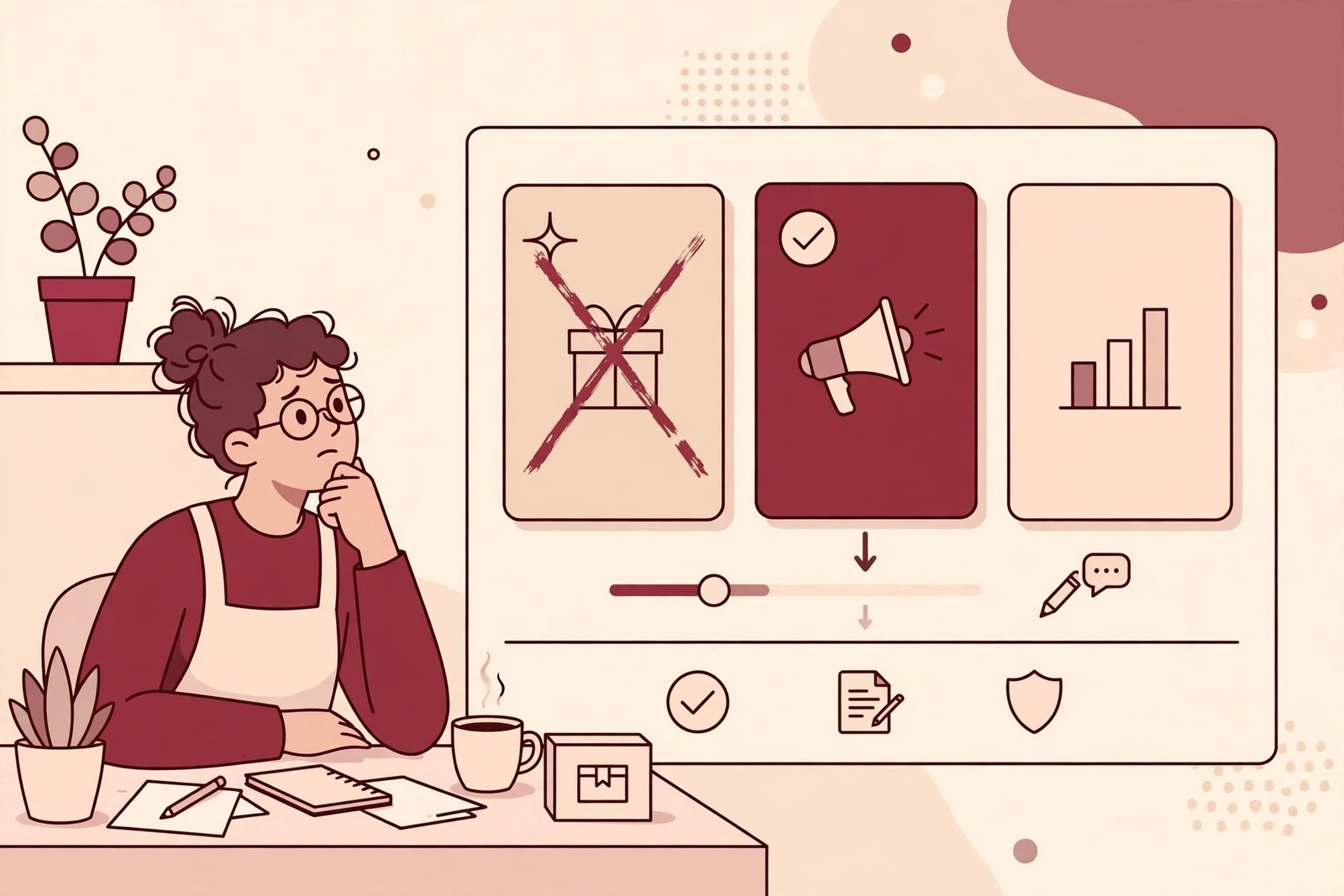
Writesonic used to be the budget pick — free tier, $16 entry plan. That tool is gone; in 2026 it became an AI search-visibility platform. Entry is Starter at $79 a month billed annually ($99 monthly), 15 articles a month. A 7-day trial needs no card, but there is no free plan. For ad copy, this is the wrong tool at the wrong price — SEO-platform money for a side-dish feature.
Price: Starter $79/mo annual ($99 monthly). Best for: a business that wants Writesonic’s SEO features anyway. Skip it if: ad copy is the job.
The brief-to-live-ad workflow (one afternoon, no wasted spend)
A tool is only as good as the brief. This workflow fits any of the seven — example: fictional bakery Riverside Bakery, launching a weekend sourdough special.
- Write the brief before you open the tool. One paragraph: what you’re selling, who it’s for, the offer, and what makes it different. Example: “Riverside Bakery’s Saturday sourdough, baked at 7am. This weekend: buy one loaf, get a second half price. The starter is 12 years old.”
- Generate 5–10 variants, not one. Look for range — different angles (freshness, the deal, the story), not ten versions of one sentence.
- Check the character counts yourself. Google allows 30 characters per headline and 90 per description. Meta primary text truncates around 125 characters in the feed. Count the winners first.
- Cut every claim you can’t prove. If the tool wrote “the best sourdough in town,” delete it unless you can back it.
- Run two variants, not ten. Pick the two most different angles, run them against each other on a small budget, and let the clicks decide. Then save the winner as your next brief.
The ad-policy rules that matter in 2026
AI-written ad copy is not banned on Meta or Google. What the platforms regulate is AI-made visuals and deceptive claims — and the rules tightened in 2026.
Meta labels ads automatically when its own generative AI features made them, or when detection spots third-party AI — usually under “About this ad.” Disclosure is mandatory only for social-issue, election, and political ads. What gets small-business ads rejected is simpler: unverified claims, misleading before-and-after images, and personal attributes in the copy.
Google added an AI label setting in July 2026: mark assets as created or edited with AI, and the ad notes it in the “How this ad was made” panel. Visible labels appear where local law requires it — the EU, India, New York, California, South Korea, Vietnam. Election ads must disclose synthetic content, and since November 2026 Google bars ads impersonating public figures with AI, even if disclosed.
The law is catching up. The EU AI Act’s transparency rules and California’s AI Transparency Act both took effect in August 2026, requiring disclosure for realistic AI-generated images, video, and audio. For a US small business, the practical rule: label AI-made visuals where the platform lets you, never use an AI face or voice to fake a real person, and never let AI write a testimonial that never happened — the FTC treats fake reviews as deceptive, AI-written or not.
Worth a glance: Constant Contact’s Catalyst (12 Nov 2026) and Perplexity’s shopping agent (3 Nov) point the same way — AI that runs the campaign, not just writes it — but both are early access.
FAQ
What is the best AI ad copy generator for small business in 2026?
It depends on the channel: HubSpot is the best free option, Anyword best for Google Ads text, AdCreative.ai best for finished Meta visuals. Pick by channel first.
Is there a genuinely free AI ad copy generator for small business?
Yes, one: HubSpot Campaign Assistant, free with a free HubSpot account. Copy.ai’s free plan was retired in late 2025, Writesonic’s in October 2026.
Can I use AI-generated ad copy on Google Ads and Meta?
Yes. Neither bans AI-written copy. Meta labels AI-made visuals automatically, Google offers an AI label setting, both require disclosure on political ads. Don’t run claims, prices, or testimonials the AI invented.
How much should a small business pay for an AI ad copy generator?
Nothing to start — HubSpot’s free tool covers the basics. If you pay, $29–$49 a month buys a good text writer; visual makers start at $32–$39. Over $69 a month needs to earn its keep across more than ad copy.
Do AI ad copy generators respect Google Ads character limits?
Some do, some don’t — trust none blindly. Google allows 30 characters per headline, 90 per description. Count the final text yourself.
Will AI ad copy get my ads rejected?
Not by itself. Rejections come from what the copy says: unverified claims, misleading before-and-after imagery, fake testimonials, personal-attribute targeting. Read every AI draft like a skeptical customer before it runs.
Bottom line
Start with HubSpot Campaign Assistant and spend nothing. If you outgrow it, $29 a month on Copy.ai Chat, or $49 on Anyword Starter if Google Ads is your main channel. If your ads are visual, Predis.ai at $32 is the cheapest honest start, AdCreative.ai at $39 for higher-volume Meta work. Skip Jasper unless brand voice is your real problem, and skip Writesonic for ad copy — it’s an SEO platform now.
The tool matters less than the workflow: a clear brief, two variants tested against each other, and claims you can prove will beat a $69-a-month subscription fed with vague prompts. For the wider picture, start with our best AI marketing tools for small business — and who writes these guides is on our About page.
Enjoying ToolsBizAI guides?
Add us as a Preferred Source on Google — you'll see our latest tools and guides first in Search, Top Stories, and AI Overviews.
Get One Useful AI Tool Tip Every Week
One practical AI tool tip in your inbox every week. No spam, unsubscribe anytime.

We’re the team behind ToolsBizAI. We hands-on test AI tools for small businesses — signing up for free plans, taking real screenshots, and fact-checking every claim before publishing. Our guides cover marketing, customer support, and day-to-day operations.